How to Organize Homeschool Unit Study Materials
In this post, I’m sharing my simple, step-by-step method for how I organize and store our homeschool unit study materials each year.
When you’re homeschooling with a unit study approach, keeping resources organized can feel overwhelming. With books to read, resources to print, activities to prep, and supplies to gather, there’s a lot going on! And nothing derails a lesson quicker than when you can’t find that one thing you need for a project, especially if your kids are already waiting at the table ready to go. (Don’t ask me how I know…)
Over the years, though, I’ve developed a system that helps me stay organized from start to finish and I can’t wait to share it with you! While I use this method with our Global Explorers Club unit studies, it should work just as well for any unit study approach.
Ready to see exactly how I organize and store our homeschool unit study materials each year? It’s super simple, I promise!
Step 1: Start with a Prep List
The first step in my homeschool organization routine is using a Prep List. I keep mine inside our Notion curriculum database, but you could just as easily create a checklist in a planner or notebook.
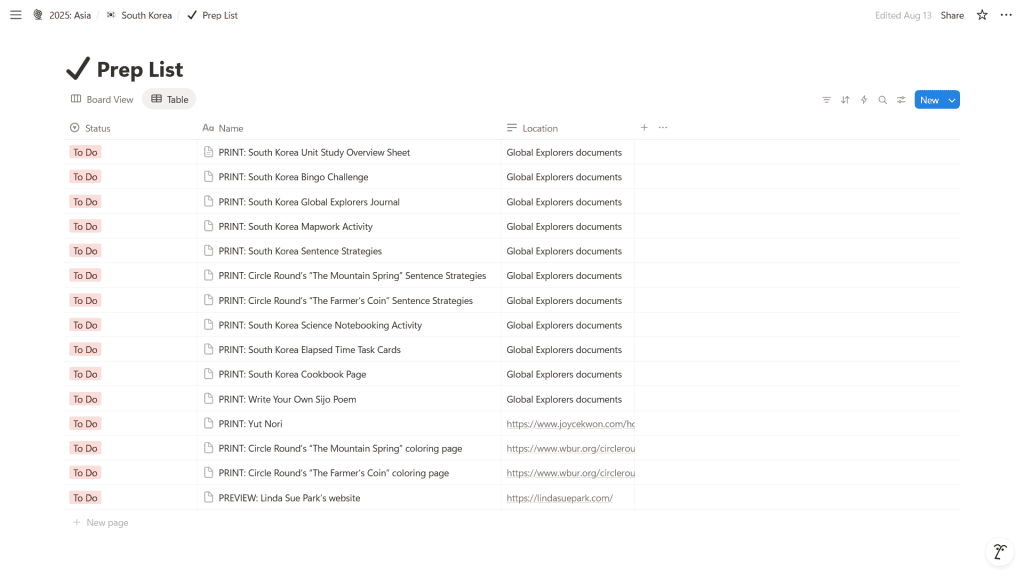
The Prep List tells me what to print and gather for each country unit study, things like mapwork and journaling pages, our Circle Round activities, discussion guides, games, recipes, art projects, etc.
Having everything outlined ahead of time makes it easy for me to get organized in one sitting instead of scrambling around each day. Trust me, I do enough scrambling in other areas of life! aim for our homeschool to be a little piece of calm and consistency in the middle of our otherwise busy days. With this system, I usually spend 10-15 minutes on Sunday evening preparing for the week ahead. That’s it!
Step 2: Store by Country in an Accordion Folder
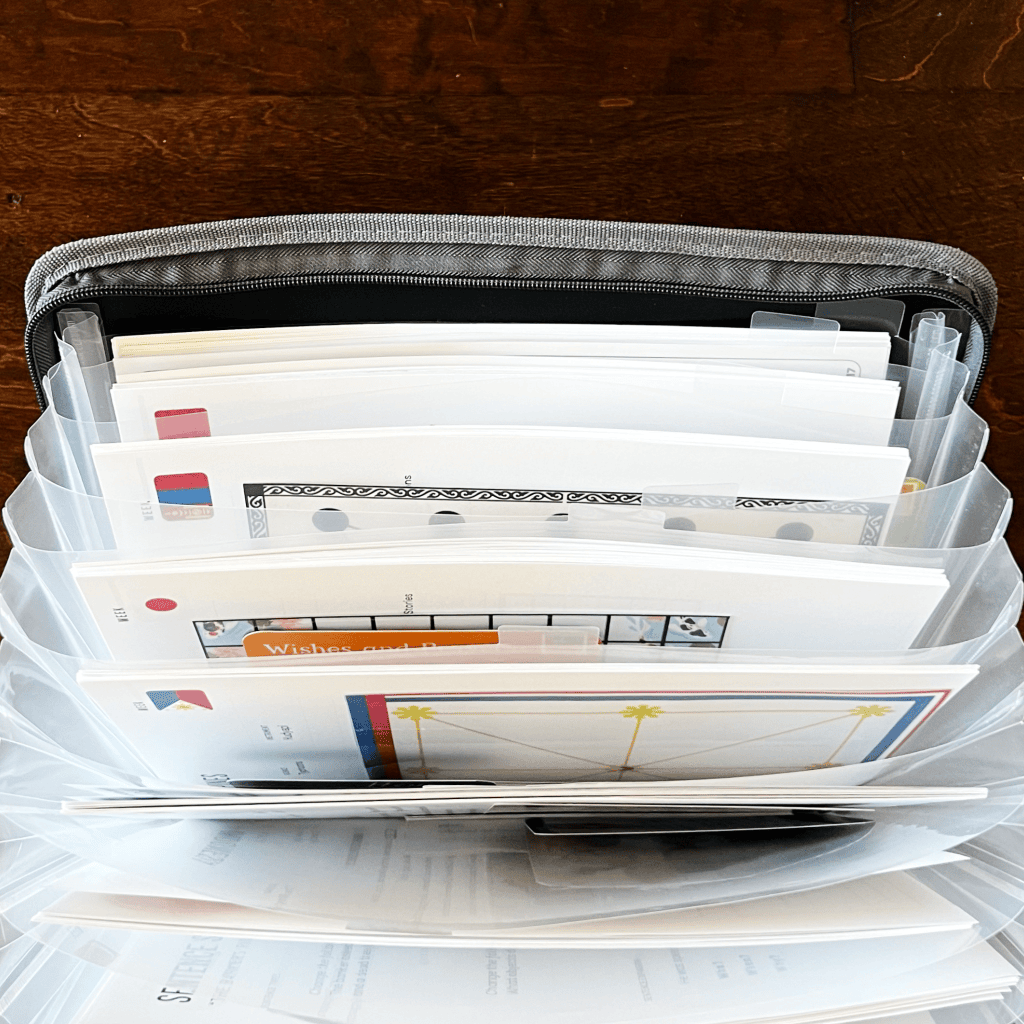
Once I’ve printed the materials, each country or topic gets its own slot in a zippered accordion folder. Mine has 14 slots, which means I can store an entire semester of unit studies in one place.
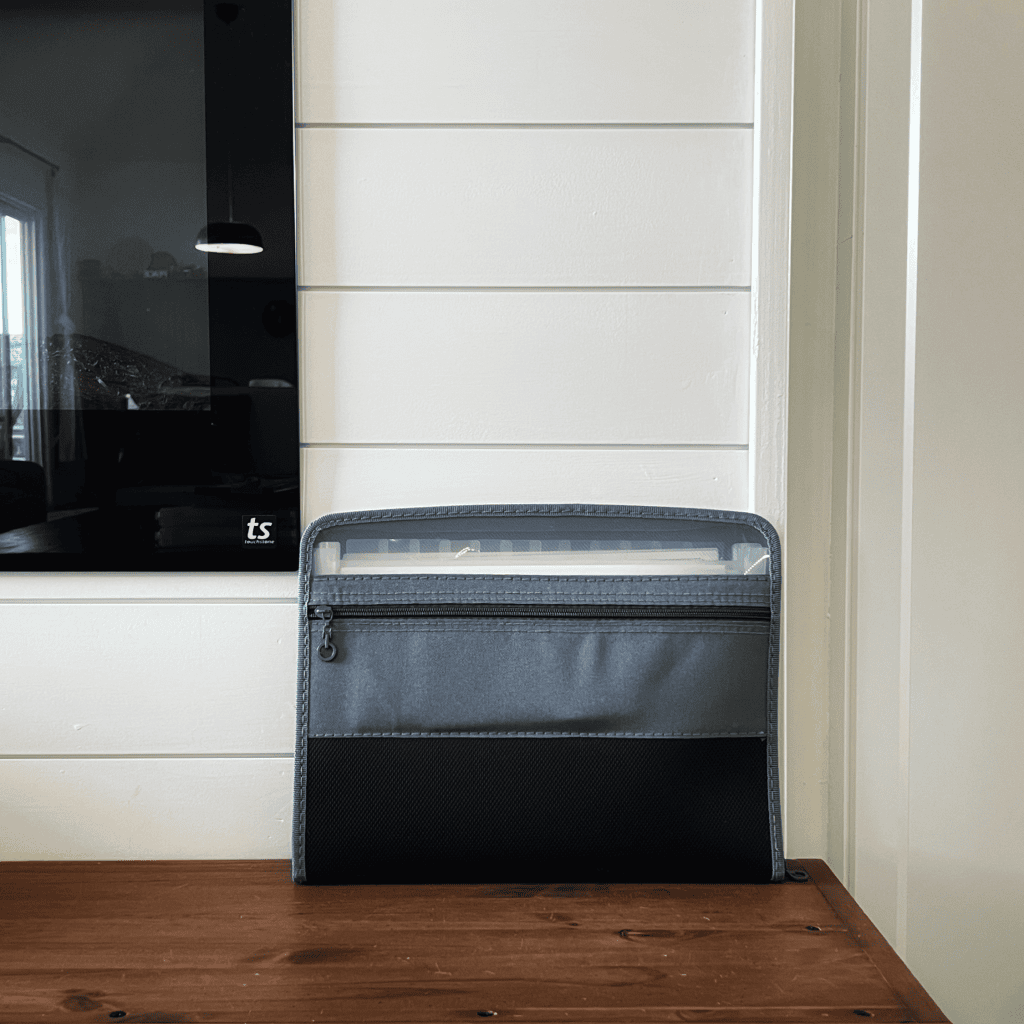
This storage method is perfect for us because:
- It keeps everything separated and organized by unit.
- It’s easy to see what’s included in each unit.
- It eliminates piles of loose papers around the house.
- It’s affordable!
Step 3: Transfer to a Clipboard Notebook
When it’s time to actually begin a new country study, I don’t pull from the accordion folder day by day. Instead, I move everything for that unit into a clipboard notebook that has five color-coded folders inside.
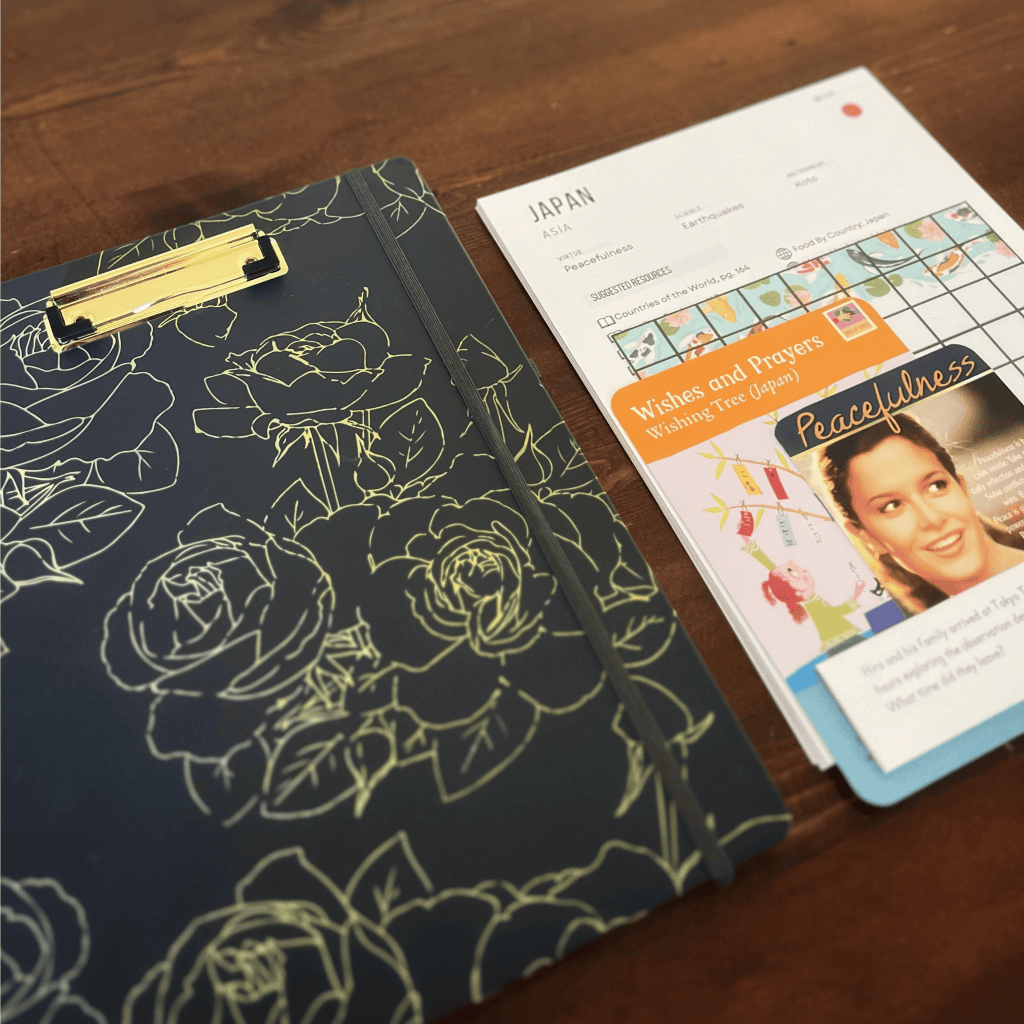
Each folder represents a day of the week, and I file resources according to our theme days:
- Mapwork Monday
- Folk Tale Tuesday
- Wild Wednesday
- Thoughtful Thursday
- Fun & Games Friday
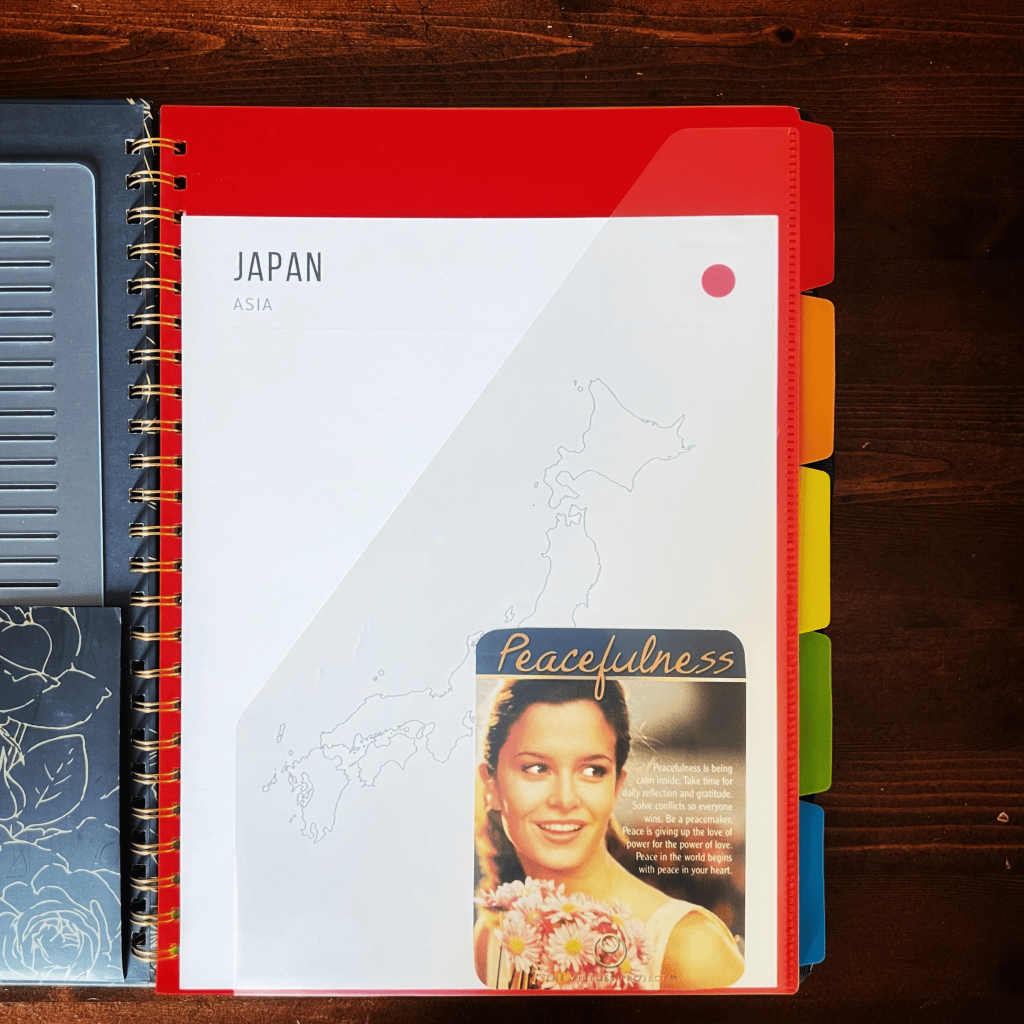
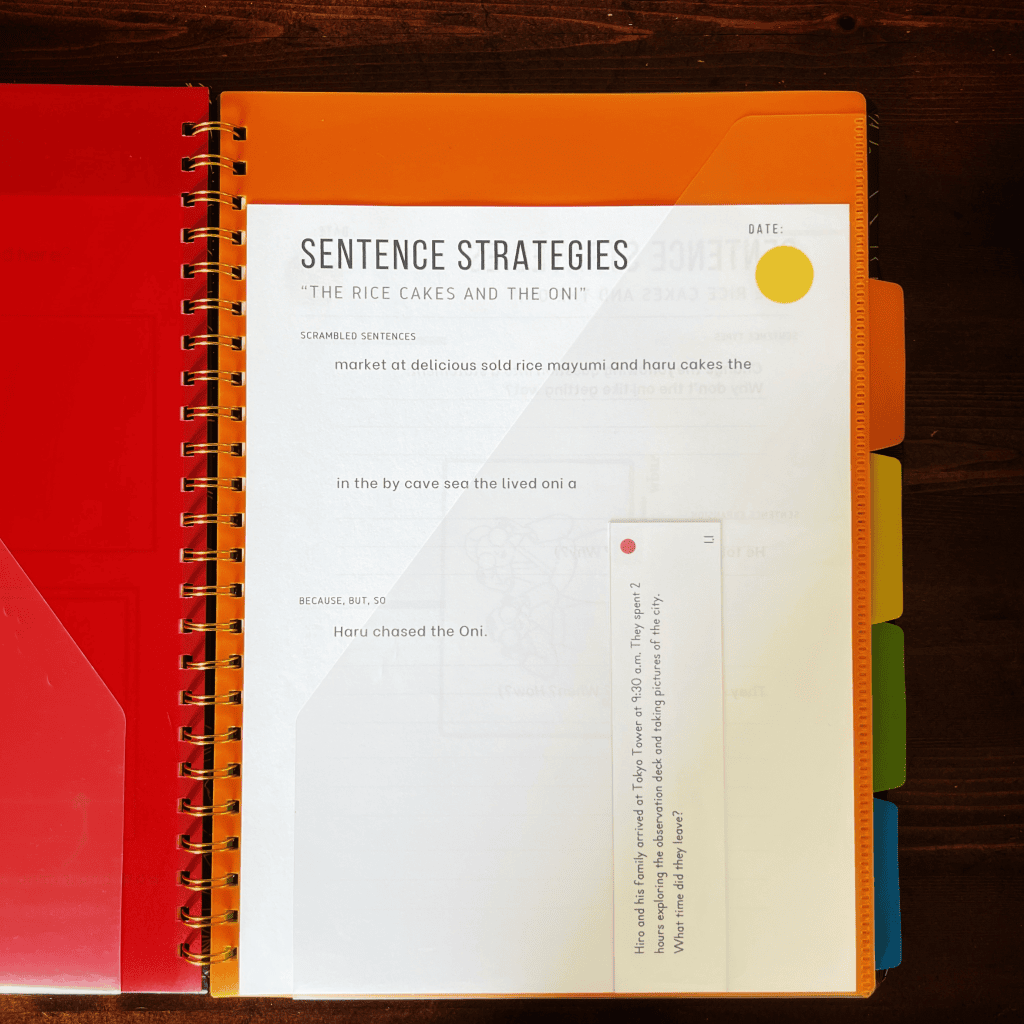
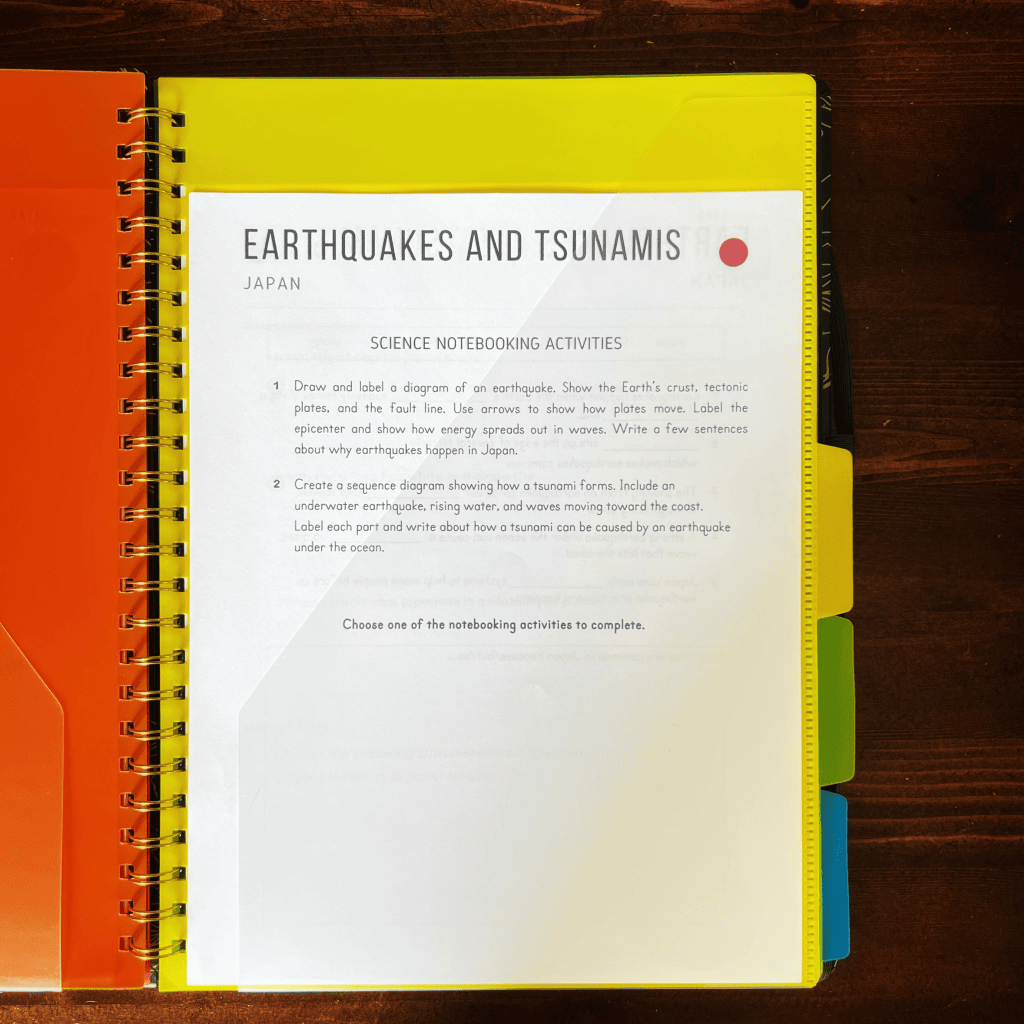
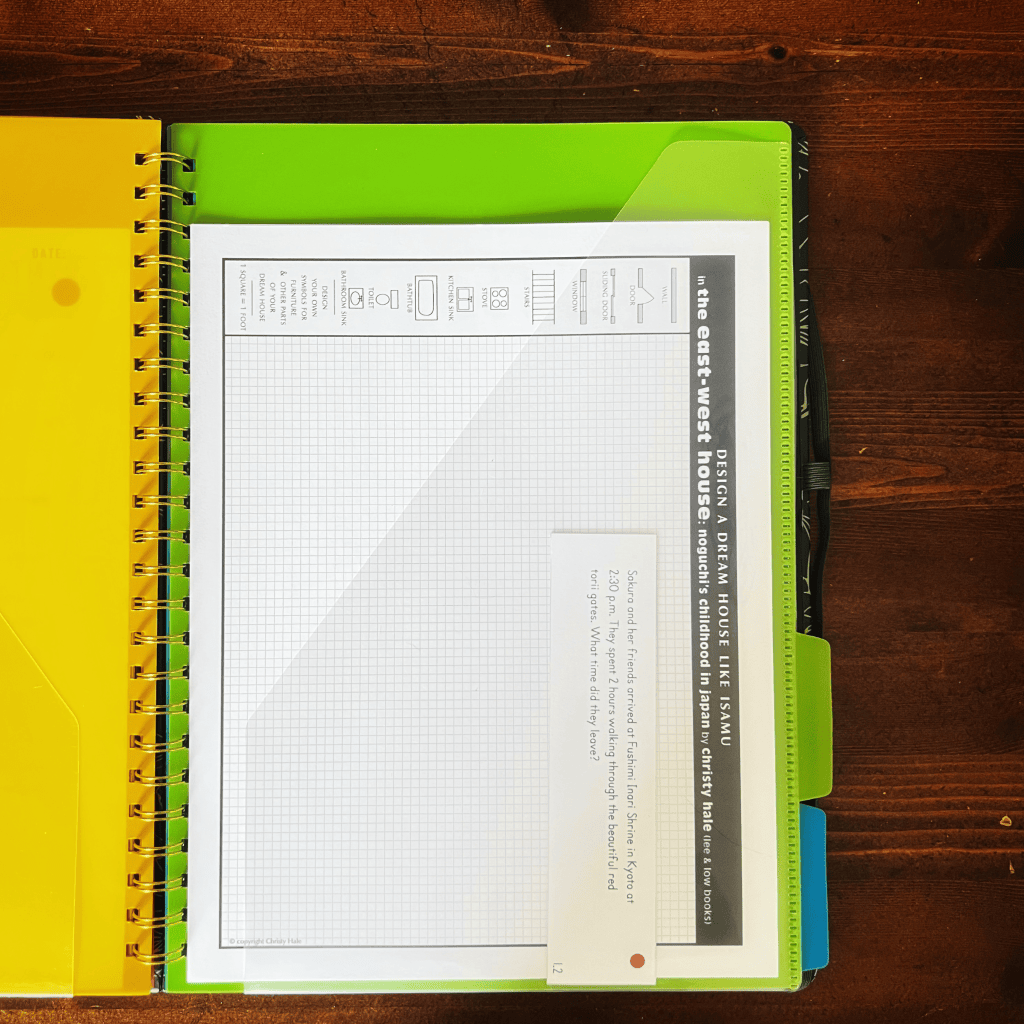
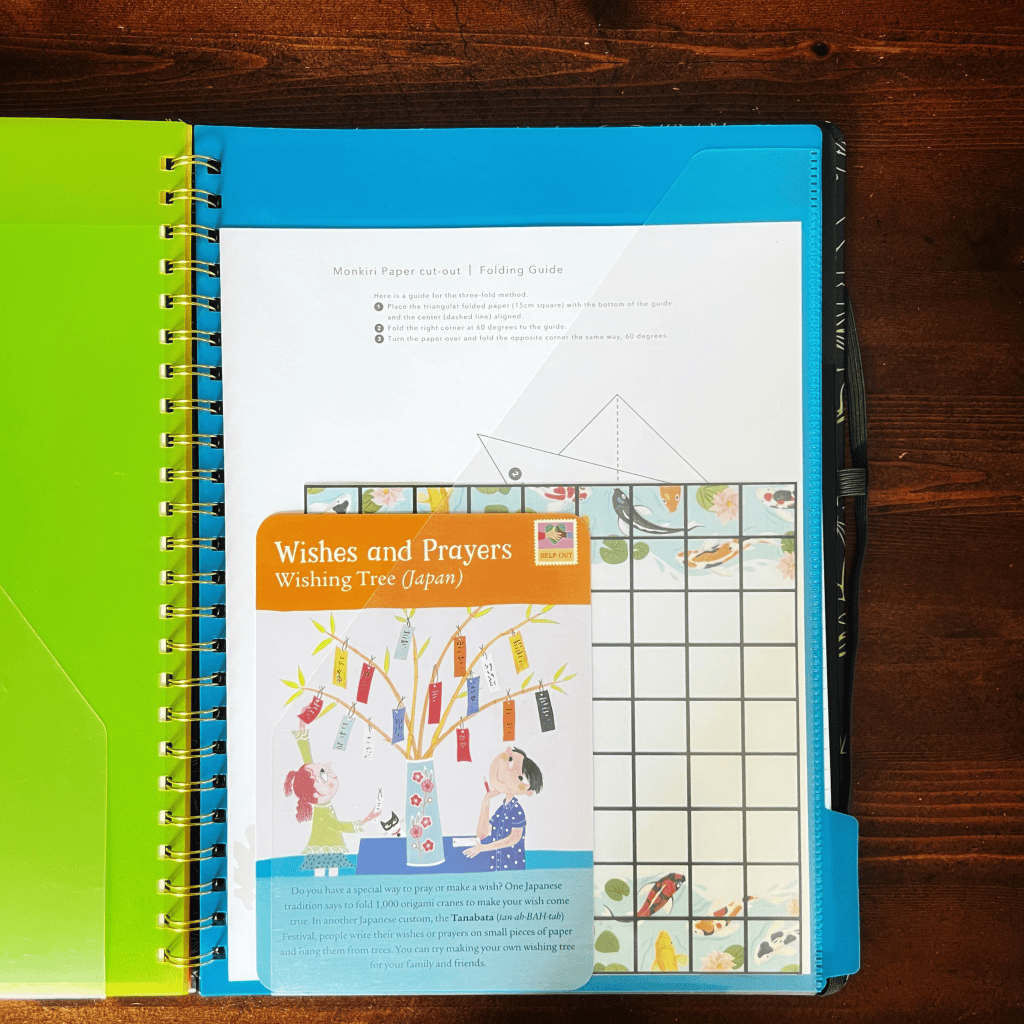
Now, all I have to do each morning is flip to the day’s folder, and we’re ready to start.
Step 4: Keep It Flexible
Since life isn’t always predictable (kids get sick, appointments pop up, or some activities just take longer than planned), I’ve always needed our organizing system to be flexible.
If we don’t finish something, I simply slide it into the next day’s folder or save it for the same theme the following week. Finished activities get filed in the back side of that day’s folder, so nothing gets lost.
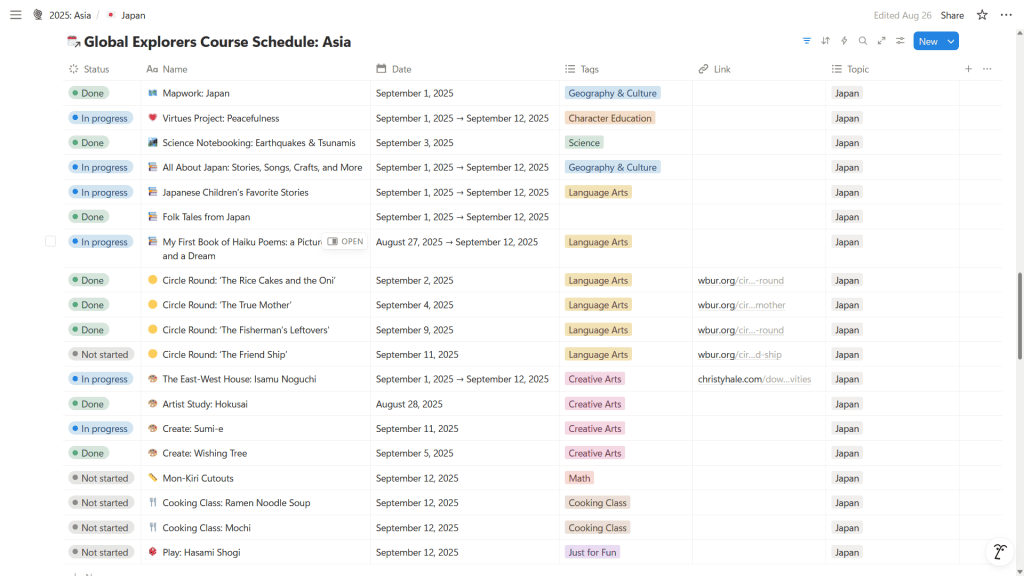
At the end of the day or week, I also update our Notion curriculum planner. This helps me track what we’ve covered, what needs to be moved forward, and where we might want to adjust. I just drag-and-drop our lesson plans as needed or mark as complete.
Step 5: Reset for the Next Unit Study
At the end of each unit, I clear out the finished activities and resources from the clipboard notebook and return them to the accordion folder. This way, everything is filed away neatly until the end of the school year.
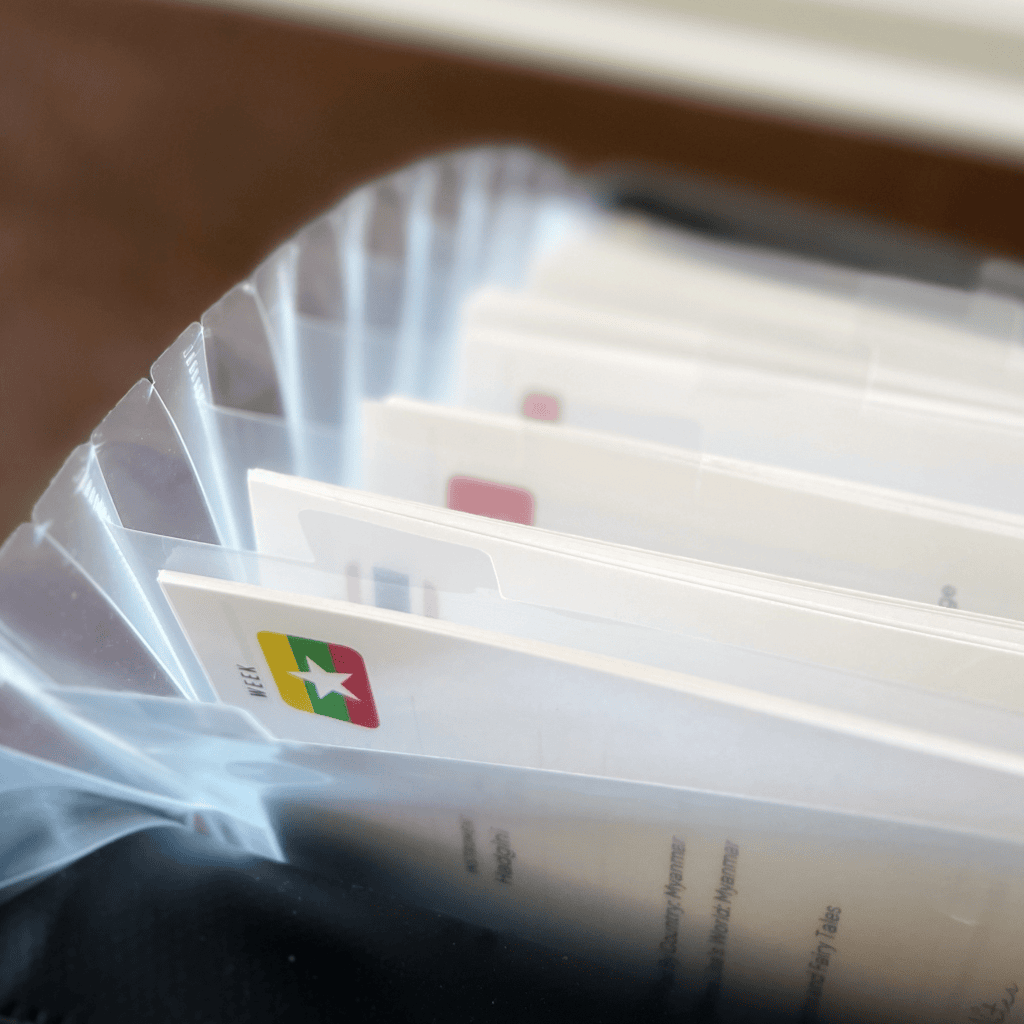
Then I pull the next country’s resources from the accordion folder, move them to the clipboard notebook, and we’re ready to go again!
Why This Homeschool Organization System Works for Us
Our unit study homeschool organization system is simple but effective because it:
- Keeps printed unit study materials tidy and accessible.
- Breaks lessons into manageable daily chunks.
- Encourages us to stick to a flexible weekly rhythm.
- Makes prep time quick and stress-free.
I actually like to spend a few days over the summer prepping our units, so once our busy school and gymnastics season begins, it’s one less thing to worry about. Having everything printed, organized, and filed ahead of time means I can just grab the next unit’s resources, transfer them into the clipboard notebook, and we’re ready to go. This little bit of upfront effort saves me so much stress during the school year and helps us stay consistent with our unit studies.
Whether you’re new to homeschooling or simply looking for some unit study organization tips, I hope this method can help you. If you decide to try it out, I’d love to hear how it works for you!
Want to see how this system works in real life? Try our free Kenya Unit Study and get a feel for the Global Explorers curriculum.
You can also explore our continent-specific Quick Start Guides:
Both posts walk you through how to set up and organize our unit studies from start to finish.
And if you’re looking for even more ideas, don’t miss these posts:
- How We Use Integrate Writing into Unit Studies
- Geography Notebooking: Creative Ideas to Bring Maps to Life
- What is a Family-Style Homeschool Curriculum?
Would this system work for your homeschool? Save it to Pinterest for later!