
How to Use the Global Explorers Curriculum: A Quick Start Guide
Welcome to the Global Explorers Club!
Whether you’re a homeschooler, classroom educator, or a family exploring world geography together, I hope this guide will help you feel confident getting started with the Global Explorers program.
Inspired by Maria Montessori’s Cultural Studies, the Global Explorers Club is an around-the-world curriculum for homeschooling families and primary educators. Our program is designed to encourage collaborative learning that’s fun and memorable.
Over the course of the Global Explorers program, you’ll spend time exploring countries, learning about different peoples and their cultures, and sharing engaging stories and folk tales from around the world. You’ll meet artists and musicians, sample global cuisine, create art, and play games together.
What Makes Global Explorers Unique
Global Explorers isn’t a textbook or a rigid program. Instead, each country study is a collection of lessons and activities that encourage fun, hands-on learning. Your students will be able to:
- Learn through stories, art, cultural activities, creativity, and discovery
- Make connections across subjects
- Follow their curiosity and explore at their own pace
Our goal is to help you raise curious, compassionate learners who love exploring the world together.


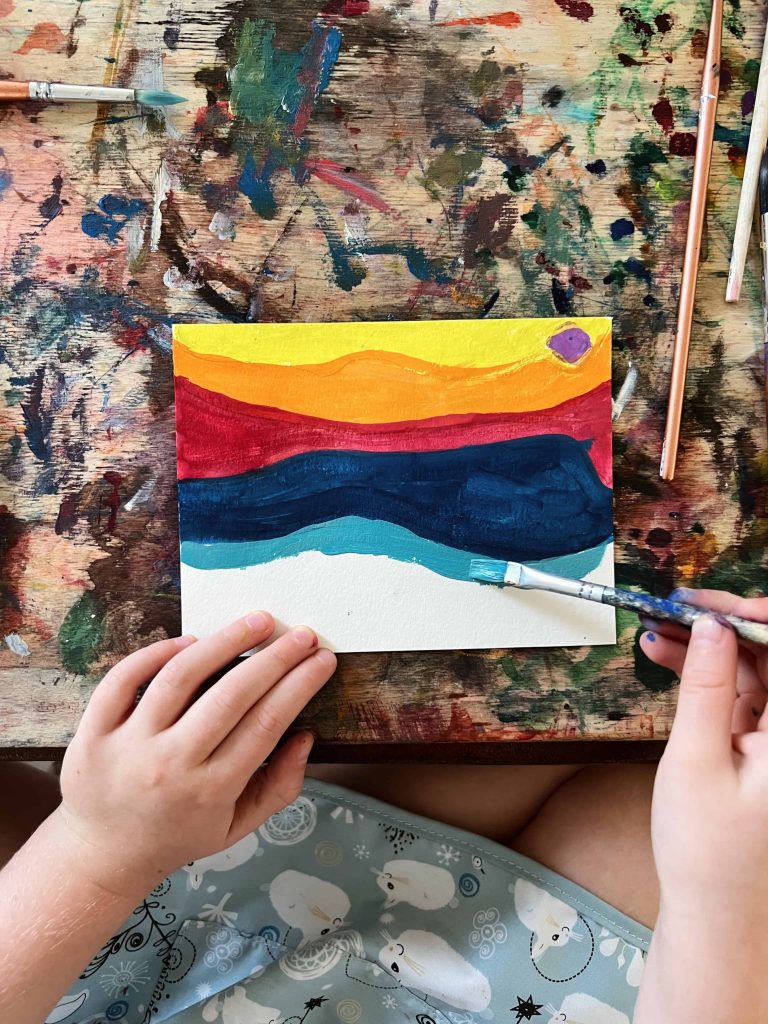
Want to See What a country Study Looks Like?
Try our free Kenya unit study and explore our program through stories, mapwork, cultural activities, notebooking, and hands-on learning.
Getting Started: A Step-by-Step Guide
Step 1: Choose a Country
Pick a country that matches your child’s interests, a holiday, or something you’re already reading. Each individual country study is self-contained, so there’s no required order.
Step 2: Open Your Files (or Digital Planner)
When you download your selected country unit study, you’ll find the following:
- A Read Me: How to Use Guide that includes the link to the optional Notion curriculum database and a suggested weekly rhythm
- A 1-page Unit Study Overview Sheet
- Lesson Plans (PDF) with embedded links
- Printable Resources, including mapwork and journaling activities, sentence strategy worksheets, science notebooking activities, games, and more.
Within the Notion Curriculum Planner:
- Each country has its own “lesson hub” with clickable activities, videos, and a prep list.
- You can check off what you’ve completed, drag-and-drop lessons on the calendar, and add your own links or ideas.
NOTE: Notion is completely free to use, and no subscription is required. It’s included to help you track and organize your lessons and to keep all your resources in one convenient place.
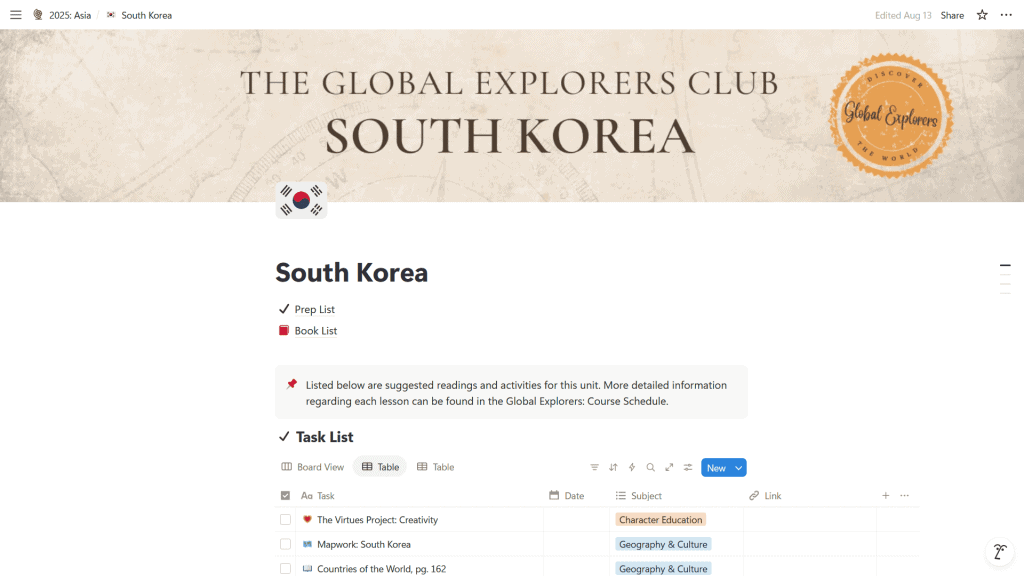
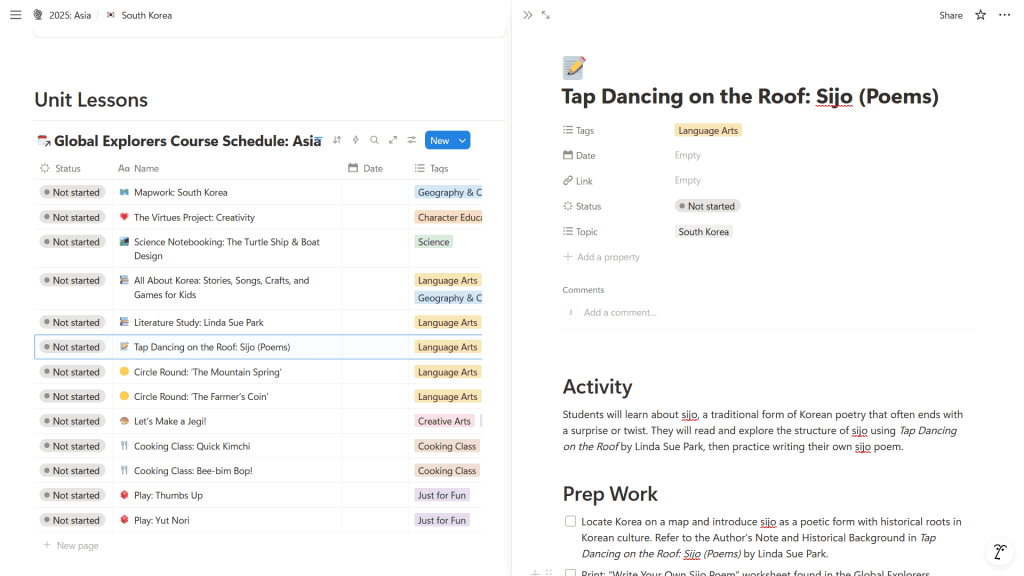
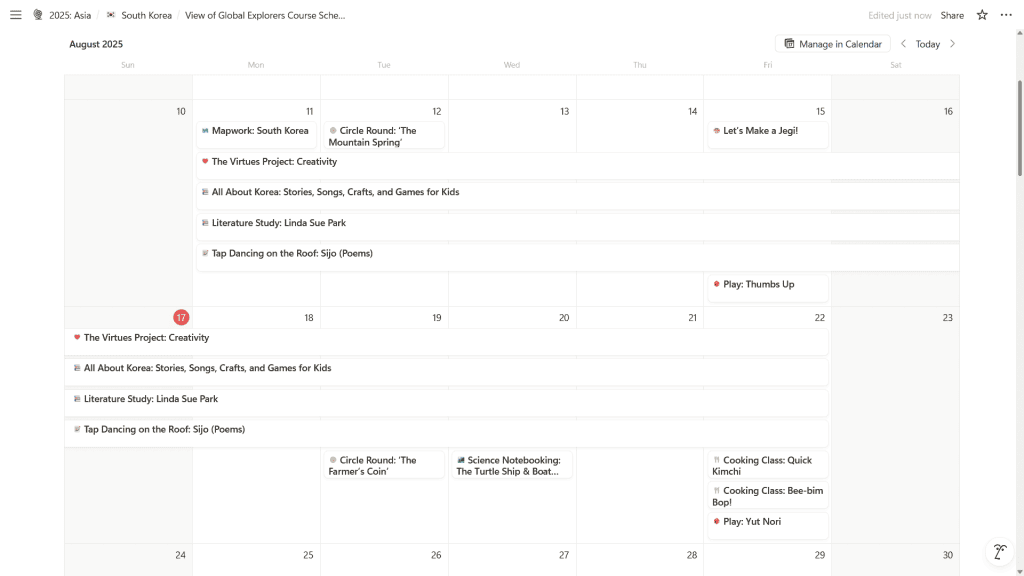
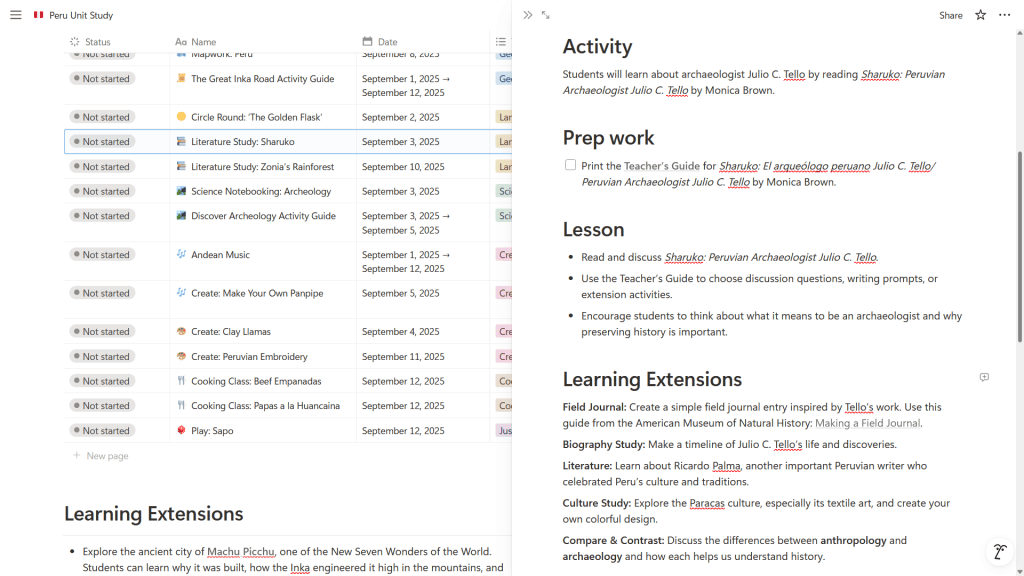
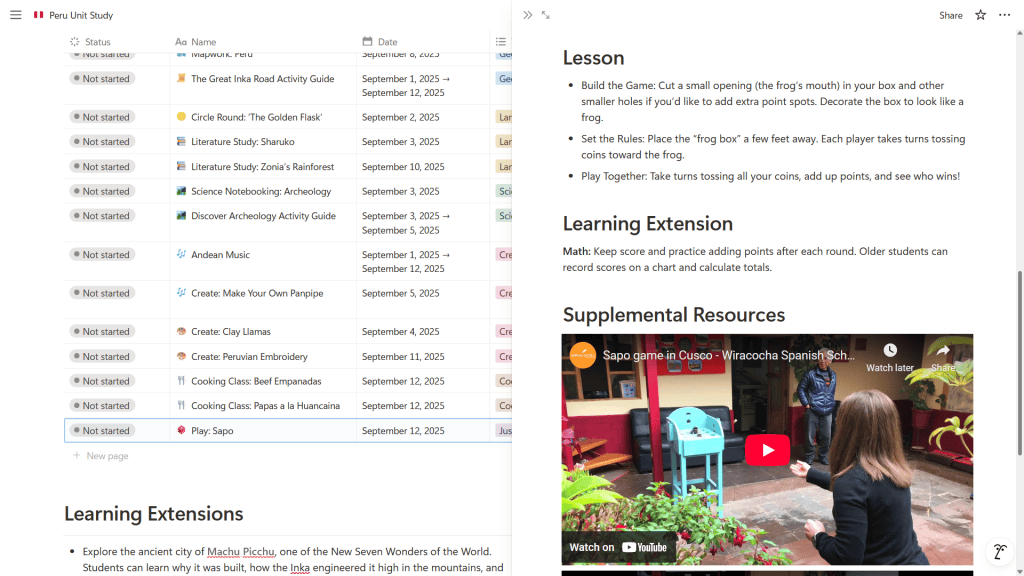
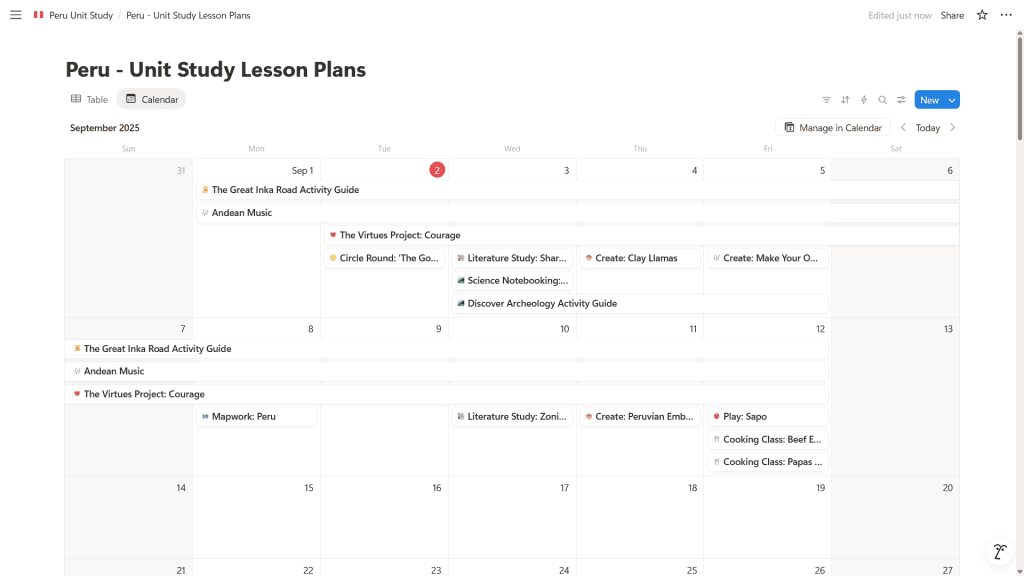
Prefer an online format? You can now access all countries, lesson plans, and resources in the Global Explorers Curriculum Library.
Step 3: Begin with a Story or a Map
There’s no better way to start exploring a country than through stories and maps.
- Read a picture book or folk tale from the included suggestions, and watch the bookmarked video to pique your children’s interest and help them visualize the country before diving in.
- Pull out a world map or open Google Earth together. Find the country and zoom in to explore cities, mountains, and rivers.
- Encourage your children to journal or draw their first impressions using the Wonder Wall printable or a simple notebook.
- They may start the mapwork activity or Global Explorers Journal early in the week, using a children’s atlas, Google Earth, and other reference books as needed.
Step 4: Pick One Hands-On Activity at a Time
Our curriculum doesn’t require a strict schedule. Simply choose one or two activities a day, or a few per week, based on your interest and available time.
Here’s the rhythm we’ve established over the years that continues to work well for us:
- Mapwork Monday: Geography & Culture
- Folk Tale Tuesday: Literature & Writing
- Wild Wednesday: Science & Nature
- Thoughtful Thursday: Creative Arts
- Fun & Games Friday: Cooking and Games
There’s no wrong way to do it. The goal is connection, not completion.
As you get started, you’ll figure out what works best for your students. Whether you spend a week or two on one country or linger for longer, our lessons aim to help children better understand the world while building empathy, gratitude, and respect for people and traditions different from their own.
Step 5: Mix, Match, and Make It Yours
Global Explorers is designed to grow with your family.
- Younger children might color maps, listen to stories, play games, and join in on arts and crafts.
- Older children can undertake the writing and notebooking activities, literature studies, conduct research, and help cook traditional foods.
- Mix your Global Explorers activities with other resources you already love.
You can study a single country for a week, a month, or longer. It’s entirely up to you.
Most importantly, enjoy the process. You’re helping your children see the world with wonder.
What a Global Explorers Week Might Look Like
Each family finds its own rhythm, but here are a few different ideas:
- 2-4 lessons per week if you’re rotating through other subjects
- Daily immersion week if you’re focusing on a single country at a time
- Mix and match: Choose one geography, one art, one science, and one story activity each week.
Remember, the Global Explorers curriculum is intentionally flexible and open-ended. It’s designed to make learning fun and memorable through a variety of books, videos, and hands-on projects that help students understand cultures, people, and places beyond what a single textbook can offer.
Here’s just one possible schedule to help you visualize how a week with Global Explorers might flow. Please, please, please use it as inspiration and not a prescription. You can always mix, skip, or rearrange activities as you like and adjust as needed for younger or older learners.
- Monday:
- Explore the country using a children’s atlas (I recommend DK’s Countries of the World) and Google Earth.
- Begin the mapwork activity and the Global Explorers Journal page.
- Read some of the suggested books together.
- Begin discussing the selected virtue.
- Tuesday:
- Listen to the Circle Round folk tale and complete the writing exercises.
- Continue reading and explore some of the optional online resources (such as Mama Lisa’s World or the Quilt of Belonging).
- Wednesday:
- Dive into the suggested science activity or notebooking lesson.
- Thursday:
- Complete the art, music, or craft activity.
- Continue reading and discussing books related to your country study.
- Friday:
- Try a recipe together, play a traditional game, watch a documentary, and celebrate the week’s discoveries!
Some families prefer to stretch one country over several weeks, while others explore a new country each month. Follow the pace that keeps learning fun and sustainable for your family.
Our Family Rhythm
In our own homeschool, we typically study one to two countries per month and incorporate a Global Explorers block into our daily routine so our country studies flow naturally with our week.
Our daily rhythm often looks something like this:
- Morning Basket: Read-alouds, mapwork, and picture books
- Global Explorers: Hands-on cultural lessons, art, science, and writing
- Learning Basket: Independent learning activities, journaling, and projects
This approach has worked well for us: structured enough to stay on track, but flexible enough to follow our curiosity and move things around as needed.
Next Step: Choose Your First Adventure
You’re ready to begin! Remember, each Global Explorers unit is designed to grow with your family.
If you’d like a little extra guidance or want to see real examples of how the digital planner works, explore our continent-specific Quick Start Guides below:
- How to Use the South America Unit Study Bundle
- How to Use the Asia Unit Study Bundle
- How to Use the North America Unit Study Bundle
- How to Use the Africa Unit Study Bundle
the global explorers club
Ready to Explore More Countries Together?
The Global Explorers Curriculum Library gives your family access to a growing collection of country studies, printable resources, and hands-on learning activities – all in one place. New countries and lessons are added regularly so your library continues to grow over time.
Whether you move slowly through one country or explore several throughout the year, I hope the Global Explorers Club helps your family learn, connect, and grow together.
Wondering if Global Explorers is the right fit for your family?
Take a look at our 10-question guide to see if our flexible, family-style approach fits your homeschooling style.
Need a Little Extra Help?
If you ever get stuck, can’t locate a resource, or just need some extra guidance, please reach out. I’m always happy to help!
📩 Email: hello@globalexplorersclub.com
I love hearing how families use Global Explorers in their own unique ways, and your feedback and stories continue to help this community grow!